
Below is my 2020 reading list. Everything recorded here has been finished - technical books are not included since it’s hard to define when they’re “finished.”
I prefer reading history-related books. Among them, The Siege of Kaifeng was very uncomfortable to read - the weak have no diplomacy, it’s truly realistic; Bad Kids lives up to its name, personally I feel it’s much better than the TV series; Rework 2 and Rework 3 are work-related, covering remote work and work methods, consistent with the 2020 trend of working from home - recommended for white-collar programmers; My Last Diet Book systematically and professionally discusses weight loss knowledge, very useful for someone like me who’s trying to lose weight; finally, Blades of the Guardians is already a classic in Chinese comics - I’ll definitely buy a physical set for collection once it’s complete (same for Attack on Titan).
Didn’t read much in 2020. Need to invest more in this area in 2021. Read + Record + Summarize - reading notes will be added later.
Current Reading List:
- Lessons from Ming Dynasty History
- The Siege of Kaifeng: Diplomacy, War, and People in Late Northern Song
- Android Efficient Progress: From Data to AI
- A Turbulent Hundred Years
- Remote: More Simple and Efficient Remote Work
- Shark’s Fin and Sichuan Pepper
- Rework 2
- Born a Crime
- Low IQ Crime
- Rework 3
- The Long Night
- Bad Kids
- Fifteen Days Between Two Capitals
- Permanent Record
- My Last Diet Book
- Blades of the Guardians
- Journey Through the Middle East
Lessons from Ming Dynasty History
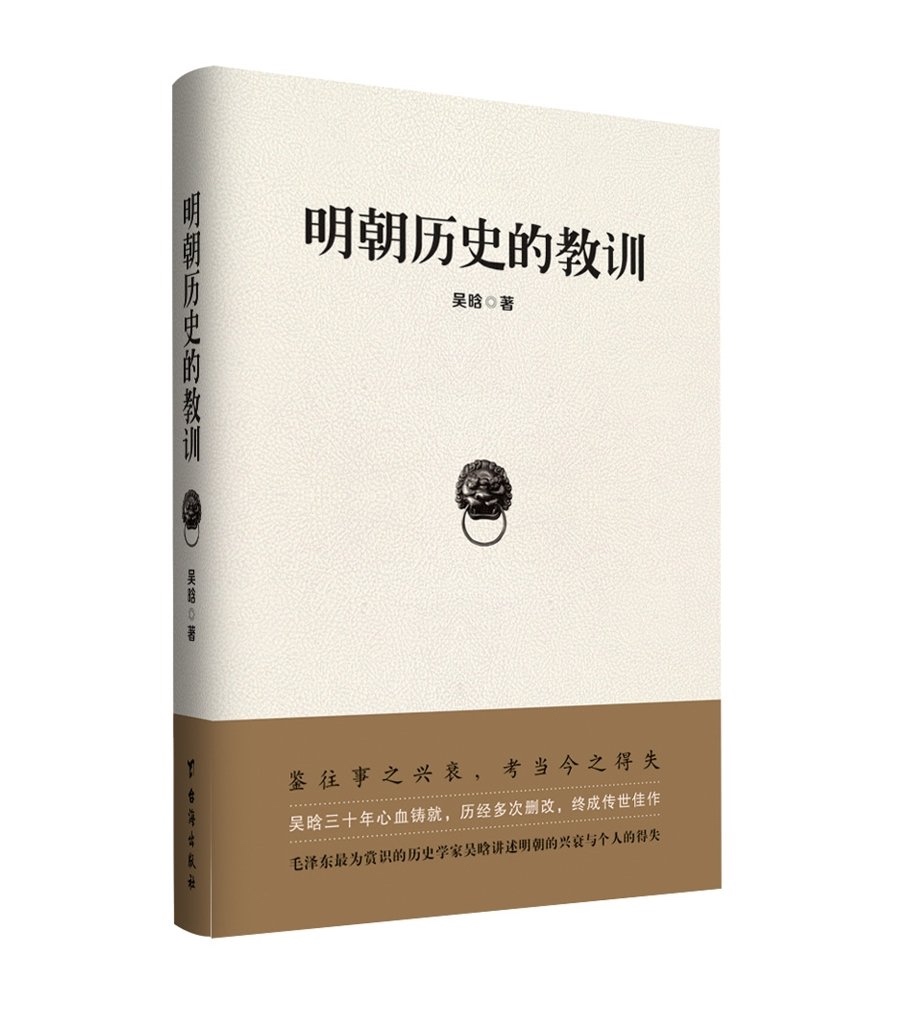
First, let me introduce the author, so readers can have some context:
Wu Han, original name Wu Chunhan, courtesy name Chenbo. Historian and educator. From Yiwu, Zhejiang. Joined the Communist Party of China in 1957. Graduated from Tsinghua University in 1934. Later served as professor at Yunnan University, Southwest Associated University, and Tsinghua University, where he was department head and dean of the School of Liberal Arts. In 1943, he joined the China Democratic League and was actively involved in the democracy movement. After the founding of the PRC, he successively served as Deputy Mayor of Beijing, Vice Chairman of the 1st through 4th Beijing CPPCC, and member of the Philosophy and Social Sciences Division of the Chinese Academy of Sciences. Elected Vice Chairman of the Central Committee of the China Democratic League in 1958. Was a deputy to the 1st through 3rd National People’s Congress, member of the 1st National CPPCC, and standing committee member of the 2nd and 3rd National CPPCC. His life’s work was research on Chinese-Canadian ancient history, with particular achievements in Ming Dynasty history. Authored “Biography of Zhu Yuanzhang” and the historical play “Hai Rui Dismissed from Office.” After the “Cultural Revolution” began, Wu Han was brutally persecuted both mentally and physically. He was arrested and imprisoned in March 1968 and persecuted to death on October 11, 1969. His unjust case was only vindicated after the “Cultural Revolution” ended.
This “Lessons from Ming Dynasty History” is a collection of essays covering Zhu Yuanzhang’s ruling methods, internal contradictions of the ruling class, the Eastern and Western Depots and Jinyiwei, civilian life, factional strife, peasants, slaves and mutinies, the official class, bandits, etc. If “Those Things in the Ming Dynasty” tells the stories of great figures throughout the dynasty, this book takes us from another angle to understand the various chaotic phenomena from the ruling class to the ruled class in the Ming Dynasty. Many chapters are independent yet interconnected. It can be said that the internal troubles and external threats of the late Ming period were not simply the Qing invasion and the rise of bandits - the dynasty had rotted from top to bottom, and one or two people couldn’t save it.
This book is available on WeRead, recommended.
The Siege of Kaifeng: Diplomacy, War, and People in Late Northern Song
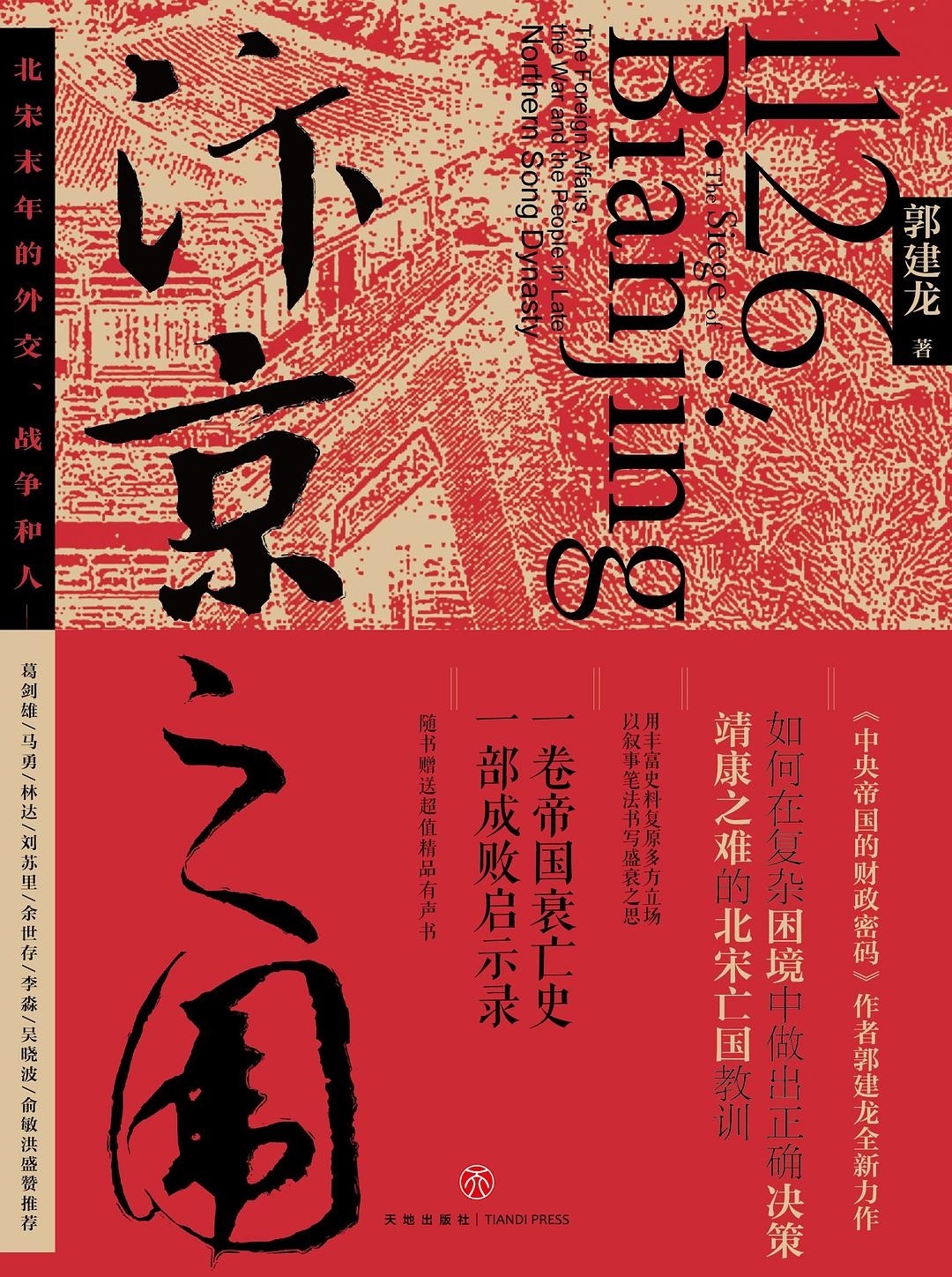
You’ve surely heard of the “Shame of Jingkang.” This book details the causes and consequences of the Jingkang Incident. Honestly, I didn’t have a detailed understanding of this period of history before reading it. After reading, I felt that calling it the “Shame of Jingkang” is absolutely right - especially how the army collapsed at first contact, the treachery in negotiations, and the repeated plundering of the capital Kaifeng during the siege that lasted most of a year. Reading it made me both angry and helpless. Without strength, you will be bullied - this eternal truth has been proven repeatedly throughout history. It only took three years from prosperity to destruction… There’s a passage in the book I really like: “It reminds us to be vigilant in peacetime. At any moment, crisis and prosperity are just one step apart. Peace is not inevitable - it requires us to view the world with humility, learning from the world’s strengths while avoiding arrogance and pride. More importantly, we must consciously avoid war. Humility is not wrong - misjudging the situation is the most terrifying thing, because all situations are interconnected. Once you take the first step, you cannot turn back, nor can you control the future direction.“
This book traces the complete historical details of the Jingkang Incident at the end of Northern Song, narrating the peace and war among Song, Liao, and Jin, focusing on the critical moments of the great historical turning point of Northern Song, and the causes and consequences of the comprehensive eruption of crisis from within and without the empire. During the Xuanhe years of Northern Song, the empire appeared prosperous, but hidden dangers lurked beneath the prosperity. Internal crises such as fiscal difficulties, military ailments, and vicious factional strife, combined with external crises like military threats from Liao and Jin in the north, gradually put the empire in a precarious situation. To “recover” the Sixteen Prefectures of Yan and Yun as a strategic buffer, Emperor Huizong decided to ally with Jin to destroy Liao. Although the Song-Jin alliance gradually consumed Liao, Jin saw through Northern Song’s weakness, and combined with complex interest disputes between the two countries, Jin turned south to attack Song. In the first year of Jingkang (1126), Jin’s army besieged Kaifeng for the second time, and the city fell in November. Northern Song collapsed, taking only three years from prosperity to destruction. Based on historical records considering the positions of Song, Liao, and Jin, the author uses accessible narrative style to recreate the historical process of the Jingkang Incident, exploring the deep causes behind Northern Song’s rise and fall, and its timeless significance as a mirror.
This book is available on WeRead, recommended.
Android Efficient Progress: From Data to AI

“Android Efficient Progress: From Data to AI” is a book combining Android advanced technology with practical application, organized into 3 main areas. First, Android engineering system practice and advancement, including mobile data technology, tool infrastructure advancement, efficiency advancement, as well as tool application advancement and engineering construction advancement; second, exploration of current mobile frontend technologies, including container technology, large frontend technology, and AI technology; third, mobile application security attack and defense technology and advanced design pattern practice. The book is comprehensive, focusing on practical experience and advanced skills. Through this book, you can not only learn the latest mobile technologies and knowledge combining advanced technology with practical applications, but more importantly, comprehend the author’s spirit of technical research and thinking methods, helping Android developers progress efficiently.
“Android Efficient Progress: From Data to AI” is suitable for mobile application developers, Android system developers, Android system security engineers, and mobile technology leaders in the Android field.
From the book’s content, the author is an experienced developer. Many topics have fairly detailed architecture implementations that readers can use to build their own systems. It’s a rare book of experience, available on WeRead.
A Turbulent Hundred Years
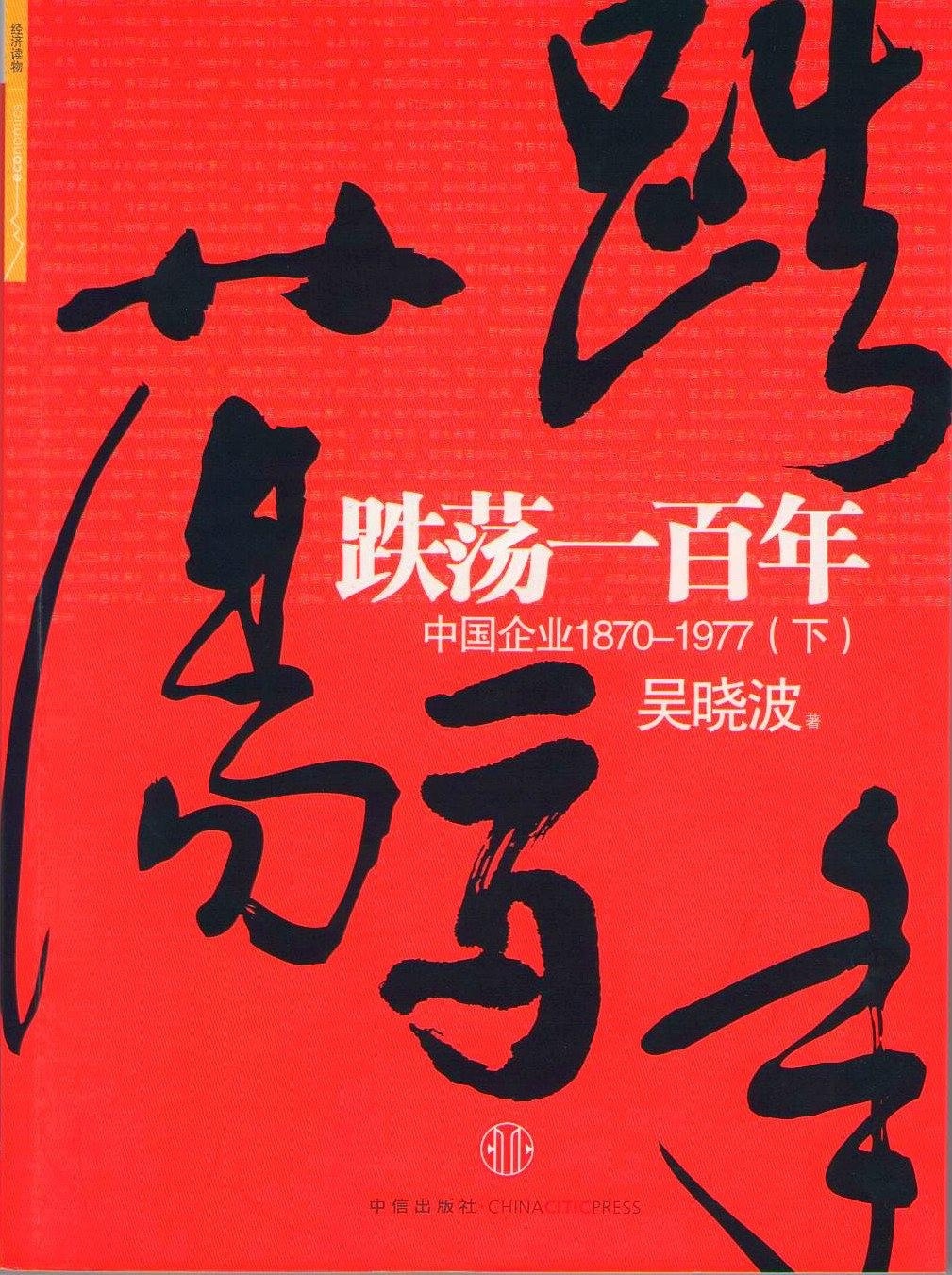
Author Wu Xiaobo presents China’s development over the past hundred years from a commercial perspective. The author mentions three phenomena in development: first, the interference of ideological debates on modernization; second, the central authority concept’s catalysis of national commercialism; third, the influence of traditional anti-commerce and official-commerce culture on the emerging entrepreneur class. Sadly, in the multiple economic reform movements after the Westernization Movement, these three themes haunted like ghosts, impossible to shake off.
My personal feeling after reading: national stability is too important for commercial development. China’s political situation in modern times was very unstable, and commercial development always rose and fell with political changes; commerce before the Reform and Opening was basically stagnant. It can be said that China’s commercial and technological development started basically from zero after the Reform and Opening. The gap with the United States, which had over a hundred years of stable development, is enormous. This is my biggest takeaway from this book. Although technology sharing and technological explosion exist, our country still masters too few core technologies.
In these 100+ years, suffering has given us the opportunity to focus and reflect, learning many things. It has allowed the Chinese to carefully examine their experiences and more harshly observe their thousand-year history. Without humiliation, we might not have paid attention at all, still immersed in the illusion of being a great nation.
Since the Opium War of 1840, one phrase has covered all themes, becoming the lifelong ideal of countless patriotic Chinese: “Strong Nation.” The urgency of “Strong Nation” made the country incredibly anxious, sometimes even impatient, willing to take risks before thoroughly investigating a path. At many sensitive critical moments, gradualist thinking was often seen as “reactionary,” and revolutionary upheaval, even bloody violence, became the choice of the entire nation. A hundred years of spring and autumn, with farces, tragedies, and comedies interweaving on stage.
In this 100 years driven by the “Strong Nation Dream,” China’s revival began at a dark and desperate moment of awakening. Commercial evolution has always been an important direction for national progress and national redemption. It is precisely in this process that the emerging entrepreneur class rose as an independent force. Their tortuous fate intertwined with the political changes and national choices of this country, sometimes united, sometimes split, but mostly in a discordant state. Over the past century, China’s economic problems can ultimately be summarized as adjustments in three interest relationships: first, adjustment between government interests and public interests; second, adjustment between central government and local government interests; third, adjustment between wealthy public and poor public interests. As representatives of the wealthy public, the entrepreneur group has never reached principled and constructive consensus in relationships with the government (including central and local), intellectuals, and the poor public. This has become one of the important reasons why Chinese commercial progress is always interrupted by various events.
Remote: A More Simple and Efficient Way of Remote Work
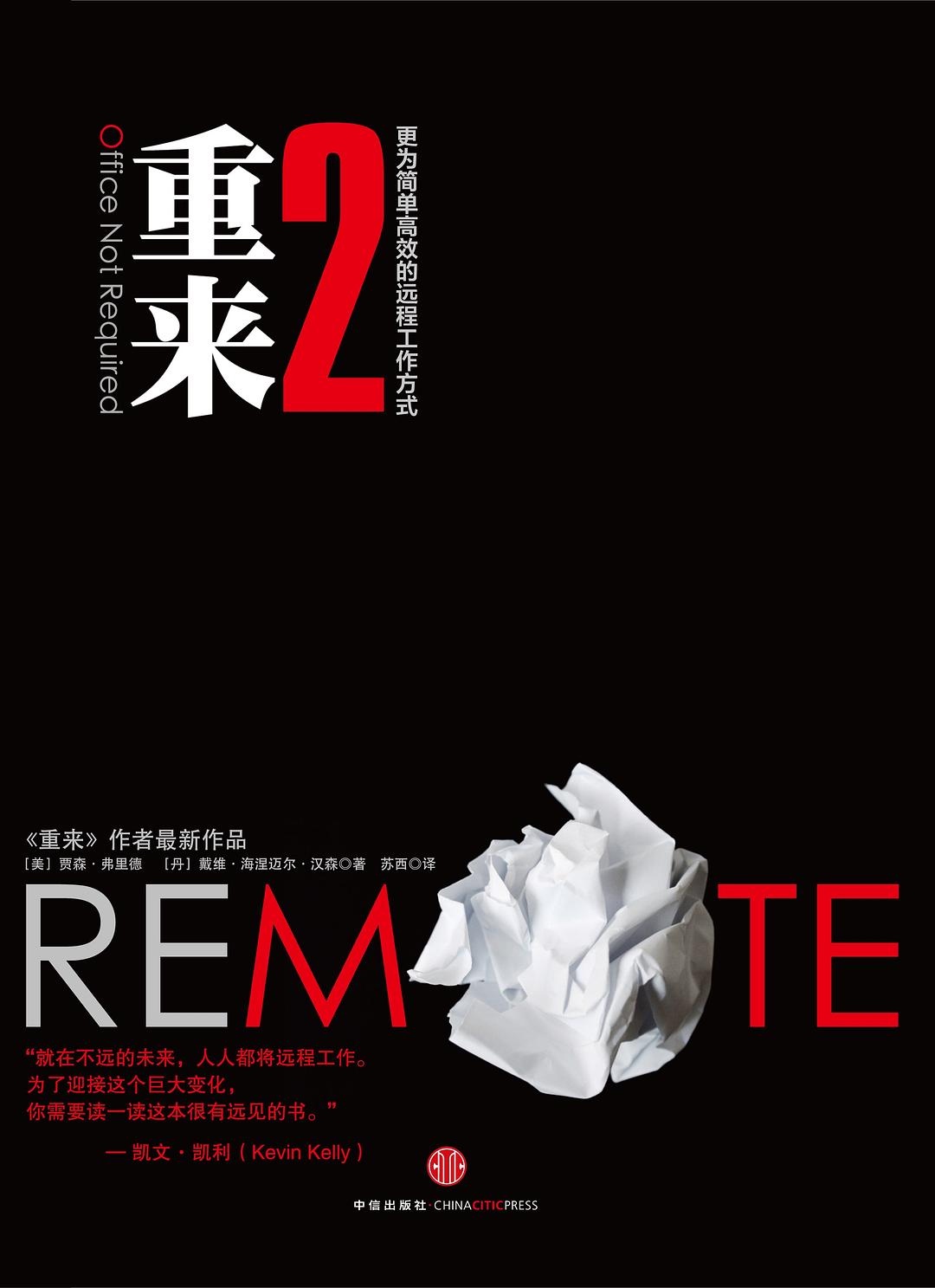
This book is called Remote. The Chinese translation calling it “Rework 2” is a terrible translation.
The authors are the two founders of 37Signals. The book covers all aspects of remote work, including the advantages of remote work, how to collaborate remotely, side effects of remote work, employee management in remote work, and self-management in remote work. The 2020 COVID-19 pandemic made most companies try remote work, and many things mentioned in this book were encountered in actual remote work.
Here are some excerpts to ponder:
What really matters is getting the work done well, not rigidly sticking to work hours.
The luxury of the new era is breaking free from the mental shackle of “enjoy life later” and doing what you love now, alongside work. Why waste time on daydreams like “how wonderful life will be when I retire”? Drawing a line between work and retirement is actually quite arbitrary. Your life no longer needs to follow such rules. You can mix the two together, having both fun and income - designing a better lifestyle that makes work enjoyable, because work isn’t the only thing in life. Those golden handcuffs prevent you from living the life you truly want to live. Break free from that resentment!
When you can’t watch someone all day, the only criterion for judgment is work results. A whole bunch of other trivial standards disappear. You just look at work results. Therefore, you don’t need to ask remote workers “what did you do today” - just say “show me today’s results.”
When meetings become the norm, become essential tools for discussion and debate, used to solve any problem, they’re being abused, and everyone becomes numb. Meetings should be like salt, carefully sprinkled on dishes for flavor, not poured on by the spoonful. Too much salt ruins the dish; too many meetings lower morale and enthusiasm.
If you don’t manage the balance between life and work well, the freedom of remote work becomes slavery. This is possible because when you break free from the 9-to-5 job, you can easily fall into the shackles of working all day.
Remote work lifts the veil, letting people see a fact that has always existed but isn’t always acknowledged or seen: excellent remote workers are simply excellent workers. It’s that simple.
Internal motivation: Programmers write open source software generally because they love doing it, not for money. Money often comes along, but it’s rarely the source of motivation. That is, when you’re solving a particularly interesting, exciting problem, you don’t need managers constantly peering over your shoulder to check if you’re working.
Everything public: Most open source software is coordinated through mailing lists and code tracking systems like GitHub. As long as someone wants to help, they can, because all information is public. You can volunteer to participate, and the person most expert in a particular area can easily jump in.
Shark’s Fin and Sichuan Pepper
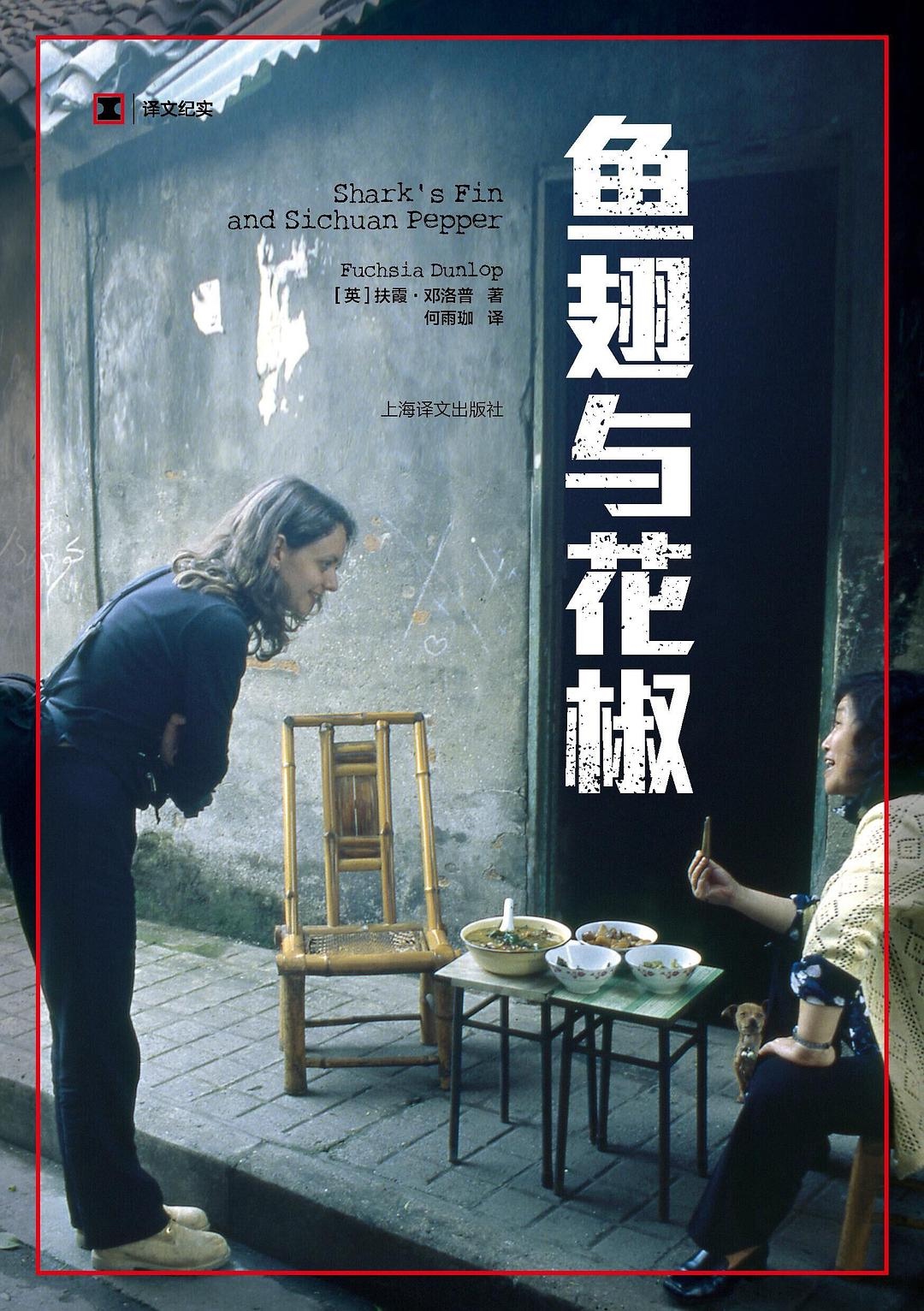
Author Fuchsia Dunlop grew up in Oxford and earned a Bachelor’s degree in English Literature from Cambridge University, then obtained a Master’s degree in Chinese Studies with distinction from SOAS, University of London. In 1994, after receiving a British Council scholarship, Fuchsia went to study at Sichuan University for a year; she then received three months of professional chef training at the Sichuan Institute of Higher Cuisine, becoming the first foreign student there.
I originally approached this “Shark’s Fin and Sichuan Pepper” with a relaxed mood. The first half of the book indeed has a very relaxed and pleasant atmosphere, following the author through the streets and alleys of Chengdu looking for home-cooked food, with a recipe for a home-cooked dish after each section. The author’s description of Chengdu life also makes one feel content:
The slow, languid feeling of this place also subtly influences you. In Chengdu, forget about realizing plans - even making plans is completely impossible. Since the Tang Dynasty, this place has been famous for its comfortable and leisurely life. The climate is suitable, and the soil is legendarily fertile. Chengdu people don’t have to work particularly hard to eat well and have fun. The city has a bit of a southern feel, even somewhat Mediterranean. Chengdu people walk slower than Beijing or Shanghai people. They sit in teahouses for an entire afternoon and evening, playing mahjong, playing cards, joking and bickering in the slow-paced, sweet-toned Sichuan dialect with drawn-out vowels and cute erhua endings. They call this “bai long men zhen” - Sichuan’s unique way of chatting about everything. And the most vivid Sichuan phrase is “hao shua” (particularly fun). They say it in a lazy voice, grinning, with bamboo chairs creaking in the background. “Those coastal people,” a taxi driver chatted with me about Cantonese and Fujianese people, “they have big ambitions and work hard, so they got rich first. We Sichuan people, as long as we make enough money to eat well and drink spicy food, that’s enough.”
The dishes described in the book include Chengdu home-cooked dishes, Hong Kong Cantonese cuisine, Hunan cuisine, and Yangzhou Jiangsu-Zhejiang cuisine. However, since the author stayed in Sichuan longer, Sichuan cuisine and Sichuan life appear more frequently. Each region’s cuisine has its own characteristics, and just reading the author’s descriptions, you can almost smell the fragrant aromas.
However, the latter half of the book also discusses food safety issues, eating wild game, eating protected animals, and some things about Chinese officialdom. The more I read, the heavier it became, yet there was nothing I could do. The city is changing, society is changing, people are changing, things are changing. The author came to the greatly changed Chengdu again, recording these changes as an observer:
On one hand, such demolition is truly a tragedy - my personal tragedy: falling in love with a place that is disappearing so rapidly. My research into cooking and food originally intended to record a vibrant city. Only later did I understand that from many perspectives, I was writing the “epitaph” of old Chengdu. I feel this is also a tragedy for Chengdu people, though they don’t realize it. This city was so charming, so unique, now being replaced by a city that exists everywhere in China - a terrible waste, sad and lamentable.
On the other hand, 1990s China seemed to overflow with vitality and optimism. The previous utilitarianism, asceticism, and monotonous blandness disappeared. The whole country was moving, 1.2 billion people united, moving forward together. In England, even demolishing a dilapidated old building would make us sad and distressed. But in Sichuan, they swung hammers all the way, flattening the entire city! This reckless confidence was admirable. They firmly believed the future would be better than the past.
So, even though my heart still ached passing through those leveled streets, I was also stirred and agitated by this vibrant optimism. I too was in an unstable state, my life was also changing. I was tapping into potential creativity, making great friends, slowly shedding skin like a snake.
Born a Crime
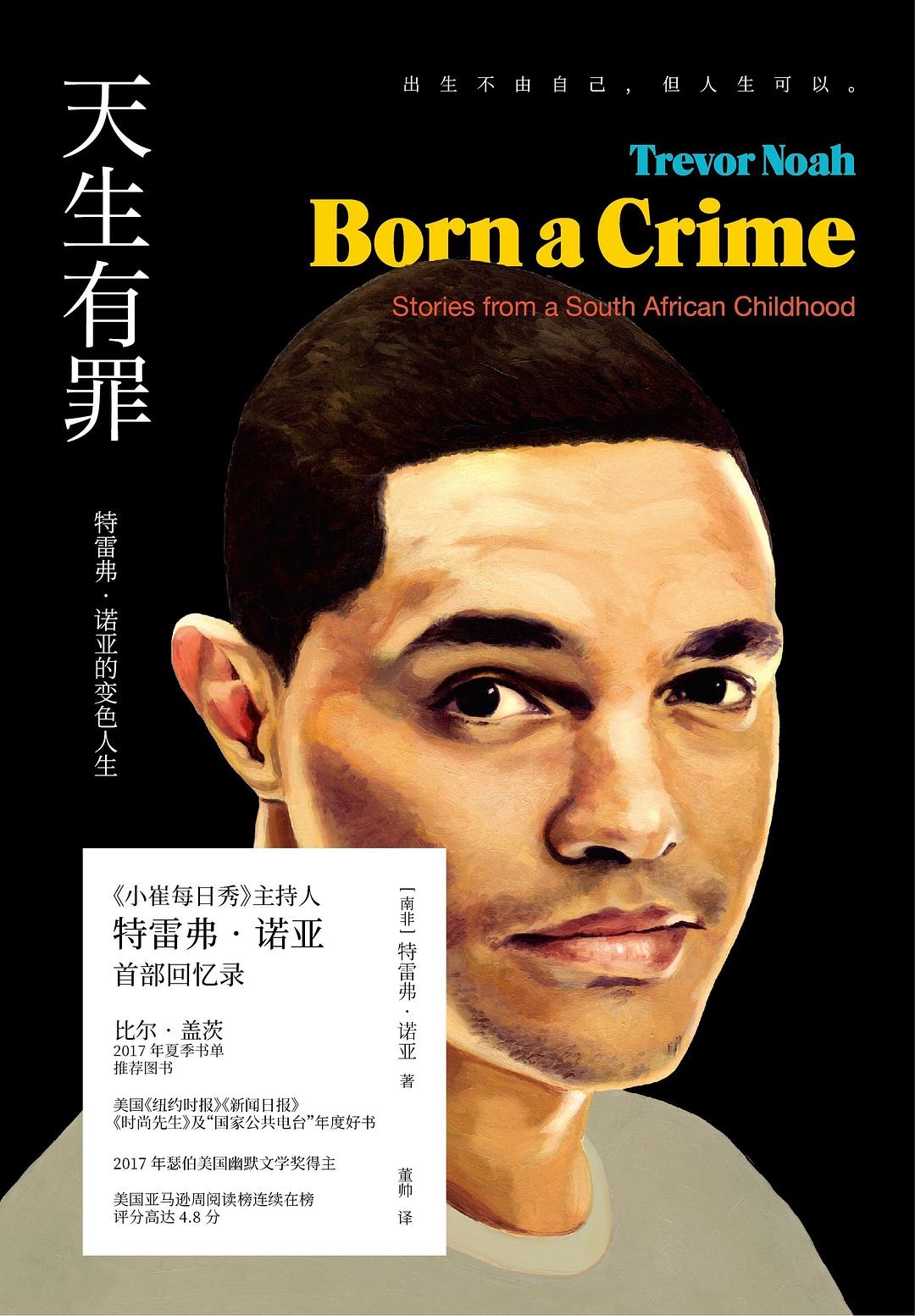
You don’t choose where you’re born, but you can choose your life
Because of the Daily Show, I started following Trevor Noah. This book is Trevor Noah’s autobiography. The title is confusing - what does “born a crime” mean? I hadn’t paid much attention to African history before. After reading this book, I learned that “born a crime” refers to the apartheid era in Africa when blacks and whites couldn’t be together, let alone have children. But Trevor is the son of a white father and black mother, so he was born a criminal.
Two major themes run through the article: one is racial segregation, one is racial identity. During white rule in Africa, apartheid was implemented. This segregation wasn’t just segregation of people, but also included language segregation, cultural segregation, ideological segregation, and even segregation between black tribes. The other is racial identity. In local terms, Trevor belongs to the colored race - the kind that wasn’t accepted by either the black community or the white community. Indians and Chinese would also group together. For a child at that time, who to hang out with (gaining acceptance from which group) was very important. From childhood, Trevor was isolated by various groups, but through his mother and knowledge, he found a way to survive among various races and groups, eventually becoming a successful comedian, talk show host, and TV/radio host.
Apartheid represented a police state, a system of laws and surveillance that kept black people under absolute control. If all the laws could be written down and stacked together, it would take over three thousand sheets of paper, weighing up to five kilograms. But the essence of South African apartheid is very easy for Americans to understand. Three things happened in American history: driving Native Americans to reservations, black slavery, and segregation. Imagine these three things happening to the same group of people at the same time - that’s apartheid.
I found my place. Since I didn’t belong to any small circle, I could move between different circles. I was still a chameleon, a cultural chameleon. I knew how to blend in. I could exercise with athletic kids, discuss computers with nerds. I could jump into crowds and dance with small-town boys. I could have brief intersections with everyone, studying together, chatting, telling jokes, delivering food.
About Me && Blog
Below is my personal introduction and related links. I look forward to exchanging ideas with peers - when three people walk together, there must be a teacher among them!
- Blogger’s Personal Introduction: Contains my WeChat and WeChat group links.
- Blog Content Navigation: A navigation guide for my blog content.
- Personally Curated Excellent Blog Posts - Android Performance Optimization Must-Knows: Recommendations and self-recommendations welcome (just WeChat message me)
- Android Performance Optimization Knowledge Planet: Welcome to join, thanks for the support~
One person can walk faster, a group can walk further